01 / Inside NCS HRMS
NCS Wizards HRMS overview: a connected employee lifecycle
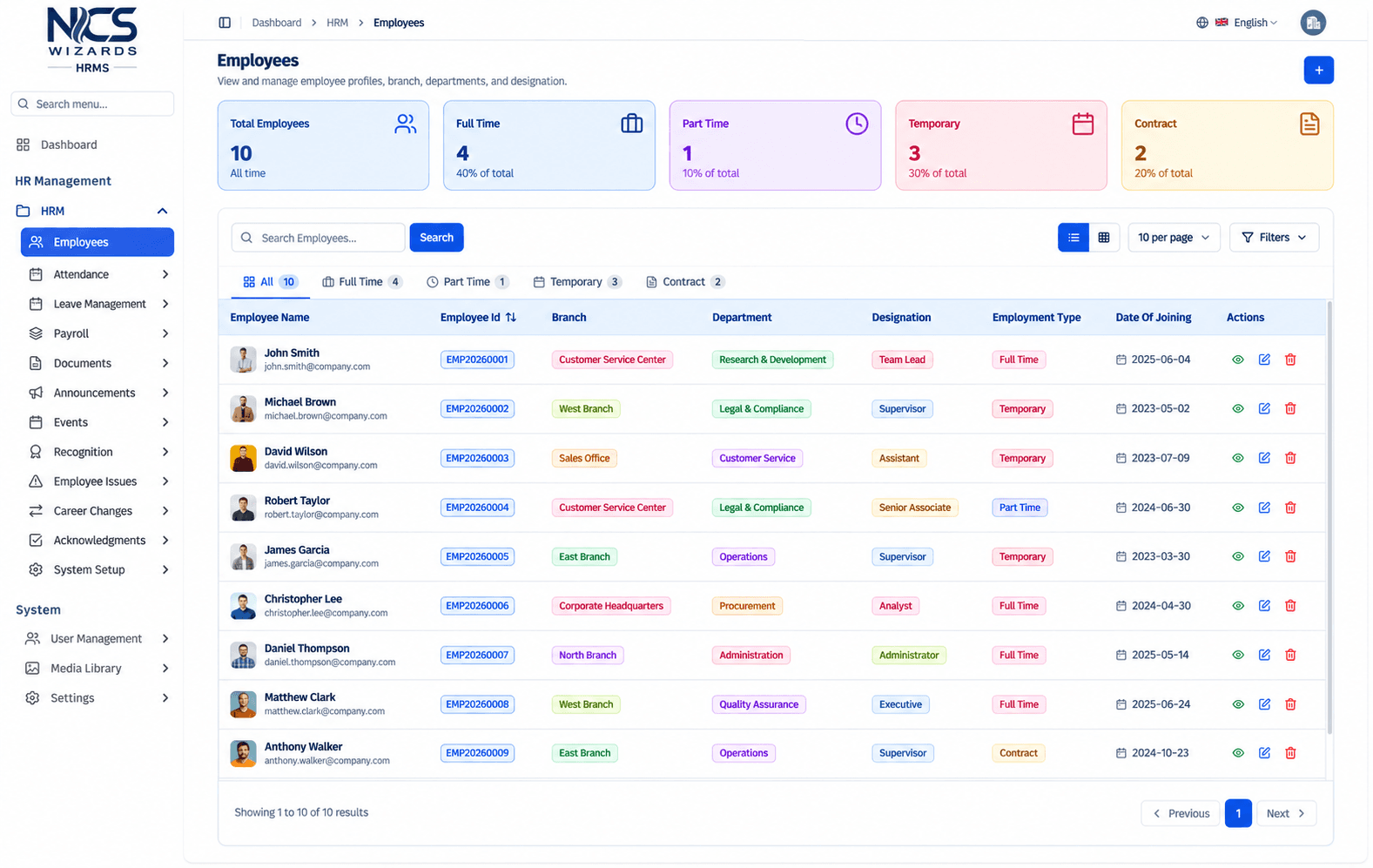
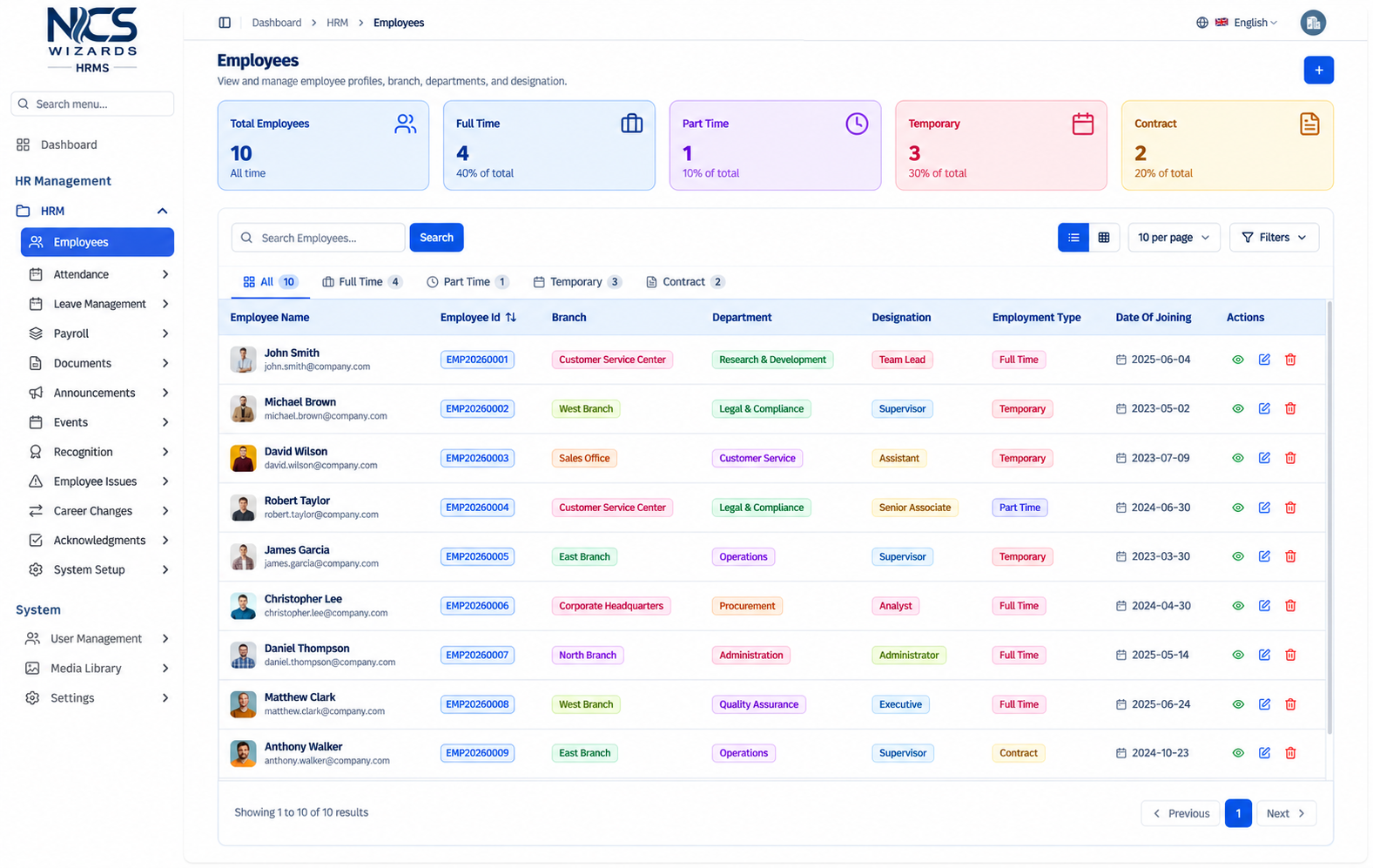
NCS Wizards HRMS brings employee information, attendance, leave, payroll and HR administration into a consistent working experience. The employee register gives HR staff a starting point for understanding a person’s branch, department, designation and employment type, while related modules organise the work that follows throughout the employee lifecycle.
For businesses evaluating an HRMS development company, the important question is how well the software connects everyday responsibilities. Bizzeonline helps define those connections: who maintains a record, who reviews a request, which information feeds payroll and how managers find the context they need. A custom HRMS should support the organisation’s working process rather than add another disconnected administrative tool.
- Employee information and organisational context in one workspace.
- Attendance, leave and payroll workflows with clear review states.
- A consistent NCS blue identity across the HRMS interface.
- Industry
- IT Services, Employment, Enterprise Software
- Services / expertise
- HRMS Development · HR Software Development · Payroll Software · Employee Management · Attendance and Leave Management
- Project focus
- HRMS development and HR software development
- Core workflows
- Employees, attendance, leave, payroll and employee lifecycle
- Implementation approach
- React.js, Java Spring Boot, PostgreSQL and AWS
Planning a similar project? Explore our custom software development services.
02 / Inside NCS HRMS
The HR challenge: moving beyond disconnected spreadsheets
An HR team can spend substantial time reconciling employee lists, attendance sheets, leave approvals and salary changes when each process uses a separate source of information. A change in branch or designation may not reach the next person who needs it. A manager reviewing leave may lack the balance or calendar context behind the request.
Our approach to HR software development starts with these handovers. The business brief should establish the employee record, organisational structure, approval responsibilities and information required by each workflow. This helps define a useful first release and identifies which existing tools need to connect with the HRMS.
- Clarify ownership of employee and payroll information.
- Connect requests with their supporting records.
- Prioritise workflows that create repeated manual reconciliation.
03 / Inside NCS HRMS
Employee management and a configurable organisational structure
The employee register groups people by employment type while retaining employee identifiers, branch, department, designation and joining date. This structure supports a more useful HR conversation than a list of names: staff can find a person within the organisation and understand the context of their employment.
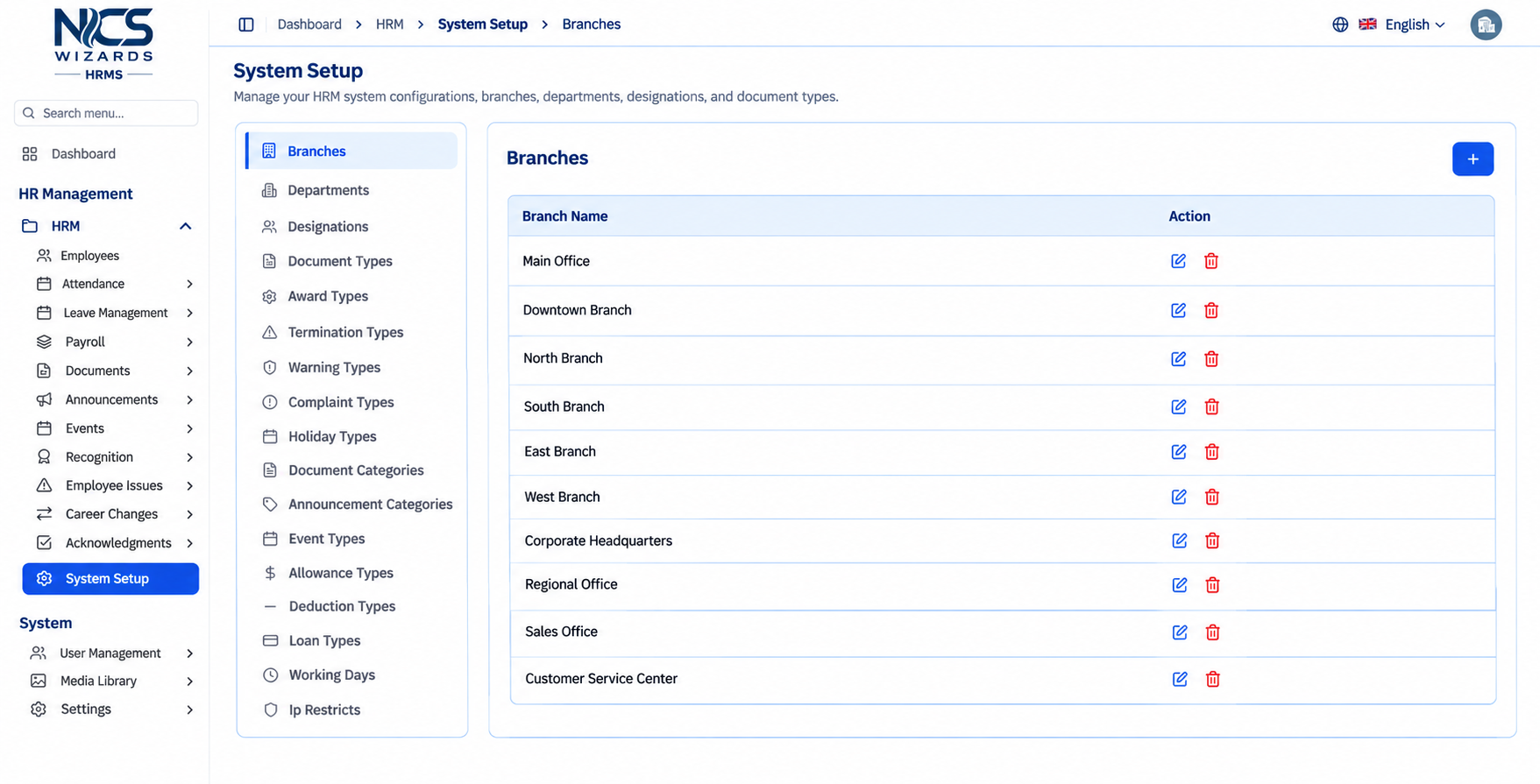
System Setup provides a dedicated area for branches and related organisational configuration. For custom HRMS development, Bizzeonline works through how these reference records are maintained and which changes require review. Consistent branch and department data gives attendance, salary administration and employee movements a clearer foundation.
- Searchable employee records with branch and role context.
- Separate configuration for branches, departments and designations.
- A shared structure for the workflows that use employee information.
04 / Inside NCS HRMS
Attendance and shift management software
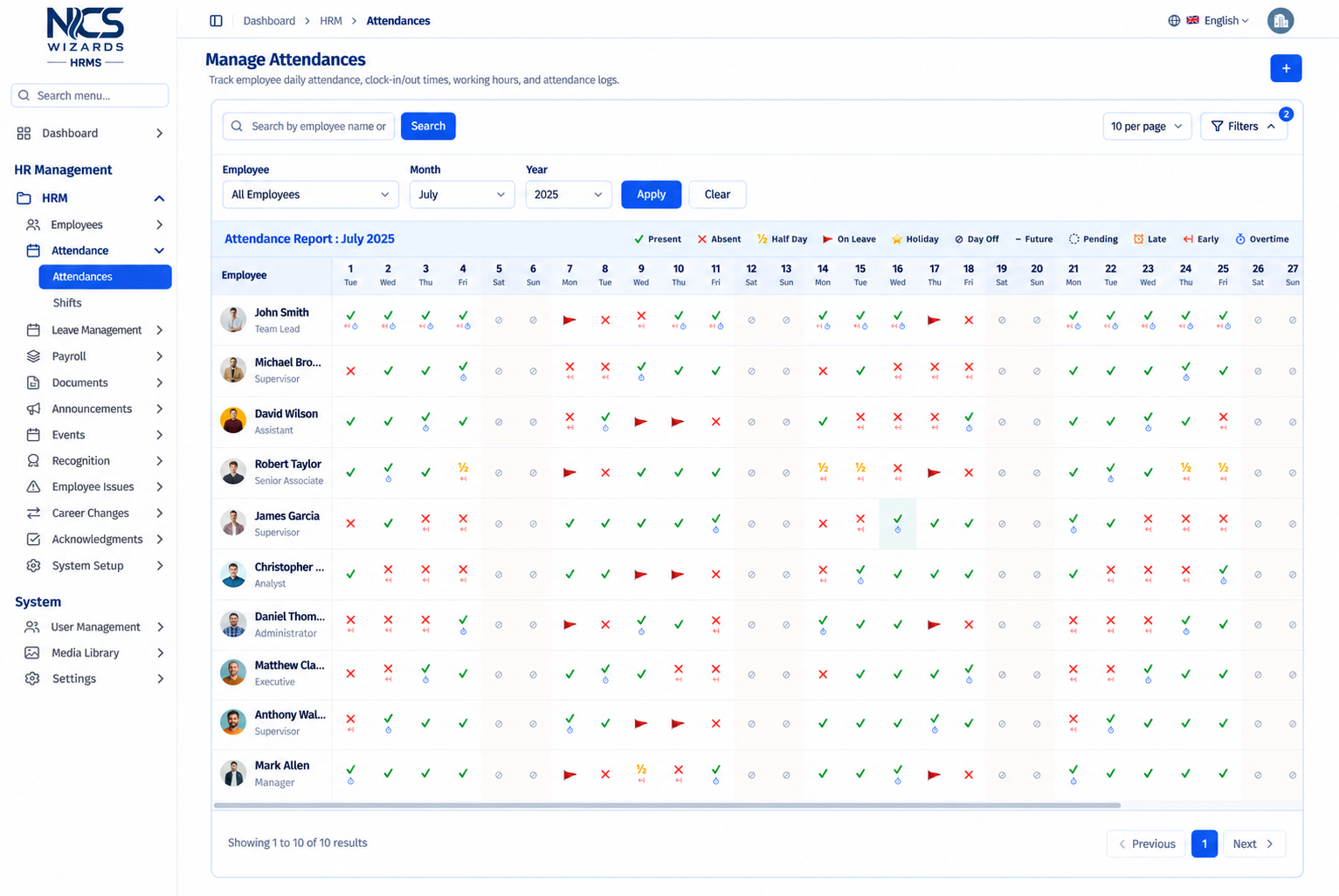
Attendance management presents the employee’s month in a scannable grid, with filters for employee, month and year. Status distinctions show presence, absence, leave, holidays and other attendance events without requiring staff to open each day separately. The shift view adds working windows, breaks, expected working time and grace-period context.
Attendance and leave management software development needs precise definitions. Our discovery process clarifies working schedules, exceptions, correction approvals and any required connection with attendance devices or existing systems. The aim is a dependable workflow from the recorded event to its review, rather than a calendar that is difficult to reconcile.
- Monthly attendance review with clear status indicators.
- Day and night shifts with working-time and break context.
- Defined correction and review responsibilities before payroll handover.
05 / Inside NCS HRMS
Leave applications with employee and team calendar views
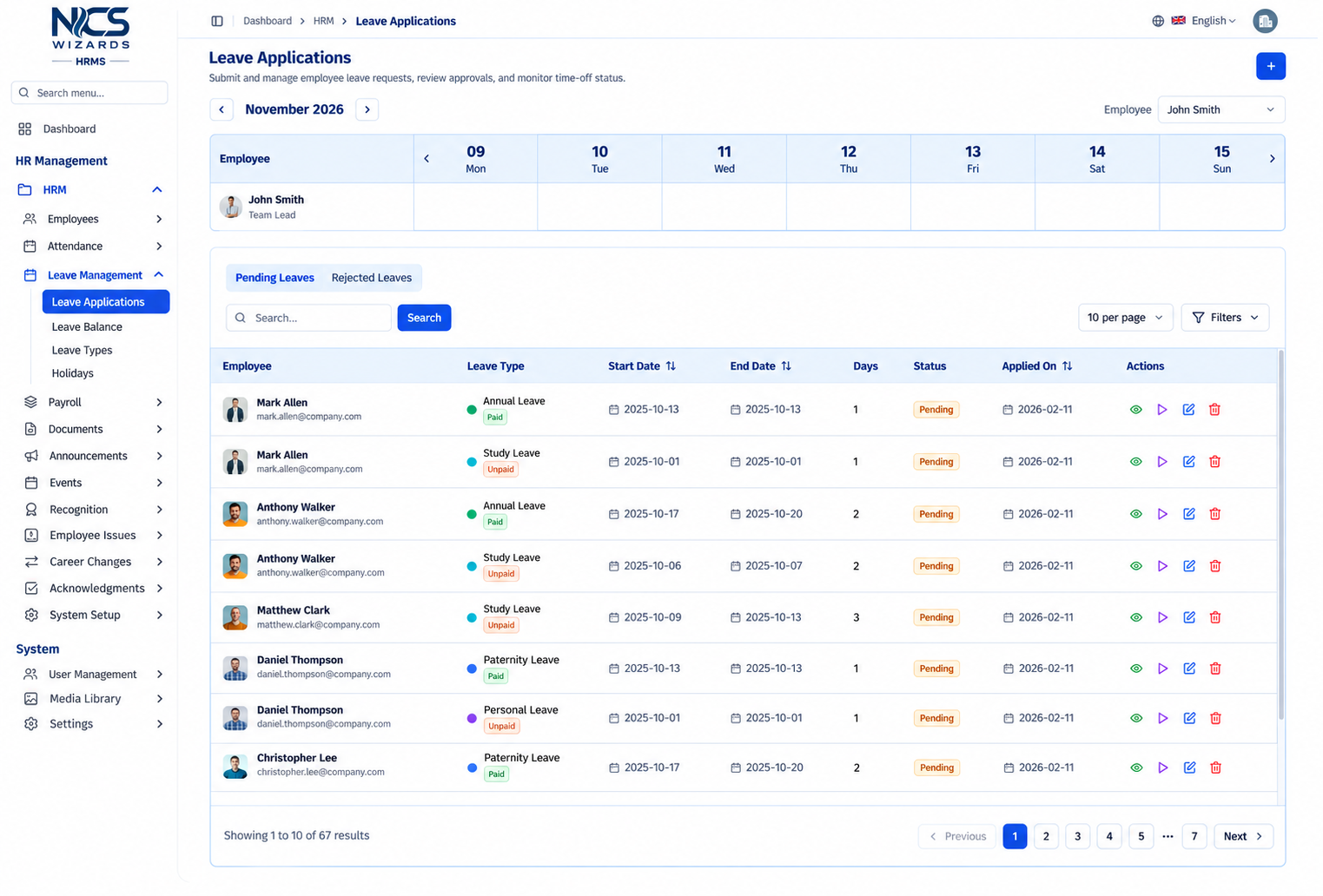
Leave applications combine a calendar perspective with a request register. An employee-specific view helps focus on one person’s requests, while the team view provides wider scheduling context. The register keeps leave type, dates, duration, status and application information together for review.
For an HRMS development engagement, Bizzeonline maps who can submit, approve, reject or revisit a request and what should happen when dates overlap. The workflow should make the next action clear while keeping the supporting employee information accessible. Approval rules and notifications can then be planned around the organisation’s actual responsibilities.
- Employee-specific and team-wide leave perspectives.
- Requests organised by date range, duration and review state.
- A defined approval process that can be connected with attendance.
06 / Inside NCS HRMS
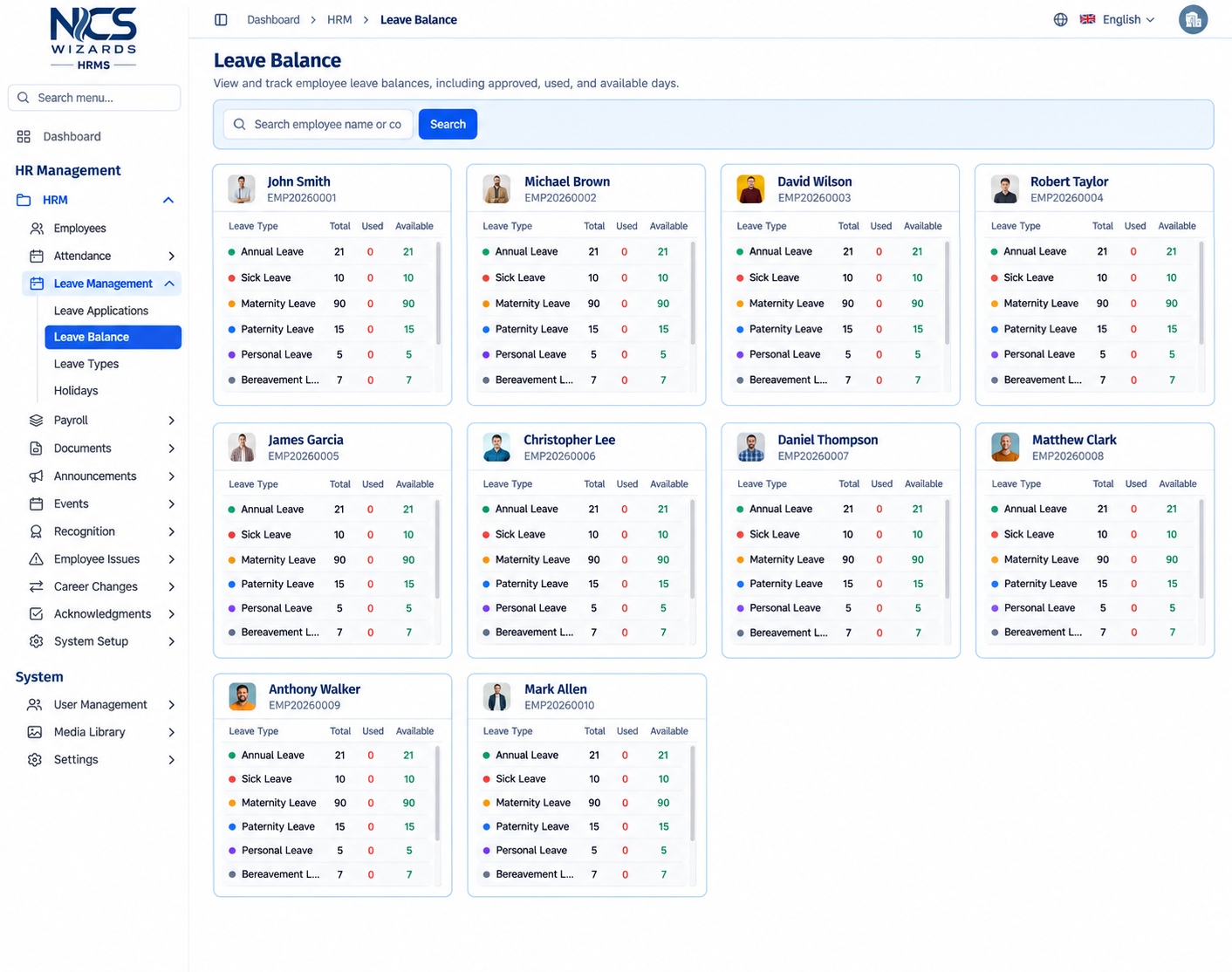
Leave balances, leave policies and holiday configuration
Leave Balance gives HR staff a consolidated view of allocated, used and available days by employee and leave category. Leave Types organises policy fields such as allocated days, paid or unpaid treatment, description and active status. Holidays maintains the date and duration context needed by the working calendar.
A custom HRMS must reflect the business’s policy decisions. During HRMS software development, our team clarifies accrual, carry-forward, adjustment and eligibility requirements where relevant, then defines how approved leave changes a balance. Policy rules should remain understandable to administrators and reviewable when a discrepancy is raised.
- Balances connected with employee and leave-type records.
- Configurable policy categories and paid/unpaid distinctions.
- Holiday information that can support scheduling and attendance review.
07 / Inside NCS HRMS
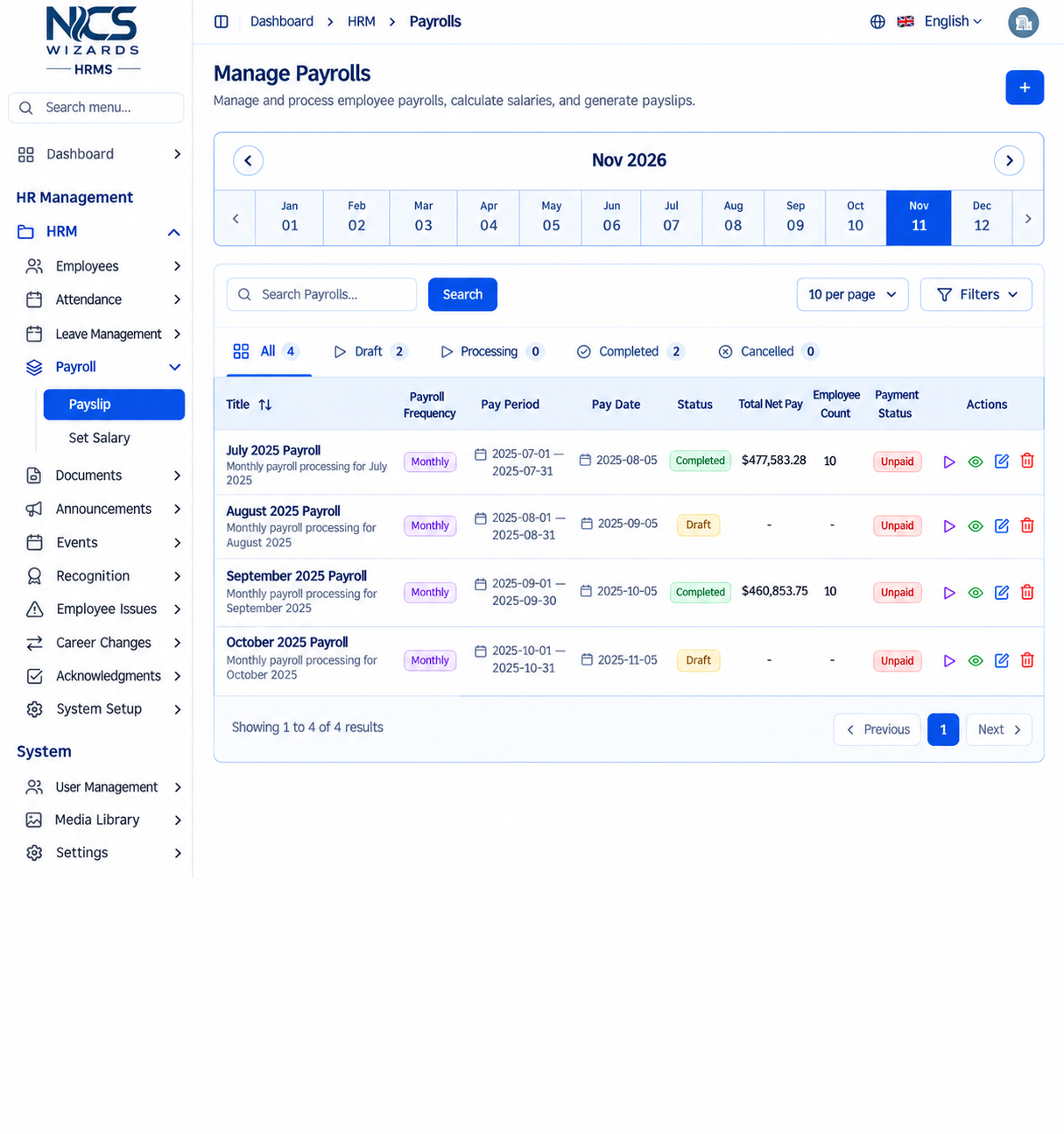
Payroll software: pay periods, processing and review
Payroll management groups runs by period and makes processing status, pay date, employee count, net-pay context and payment position available from the register. A month selector and status filters help the HR or payroll team focus on the relevant processing cycle.
When choosing a payroll software development company, businesses need to look beyond the final payslip. Bizzeonline can help define the inputs, review responsibilities, exception handling and approval sequence behind a pay run. Payment execution, statutory rules and external accounting connections should be explicitly scoped so each responsibility has a clear owner.
- Pay-period navigation and processing-state visibility.
- A clear distinction between payroll processing and payment status.
- Review steps and integration responsibilities agreed before implementation.
08 / Inside NCS HRMS
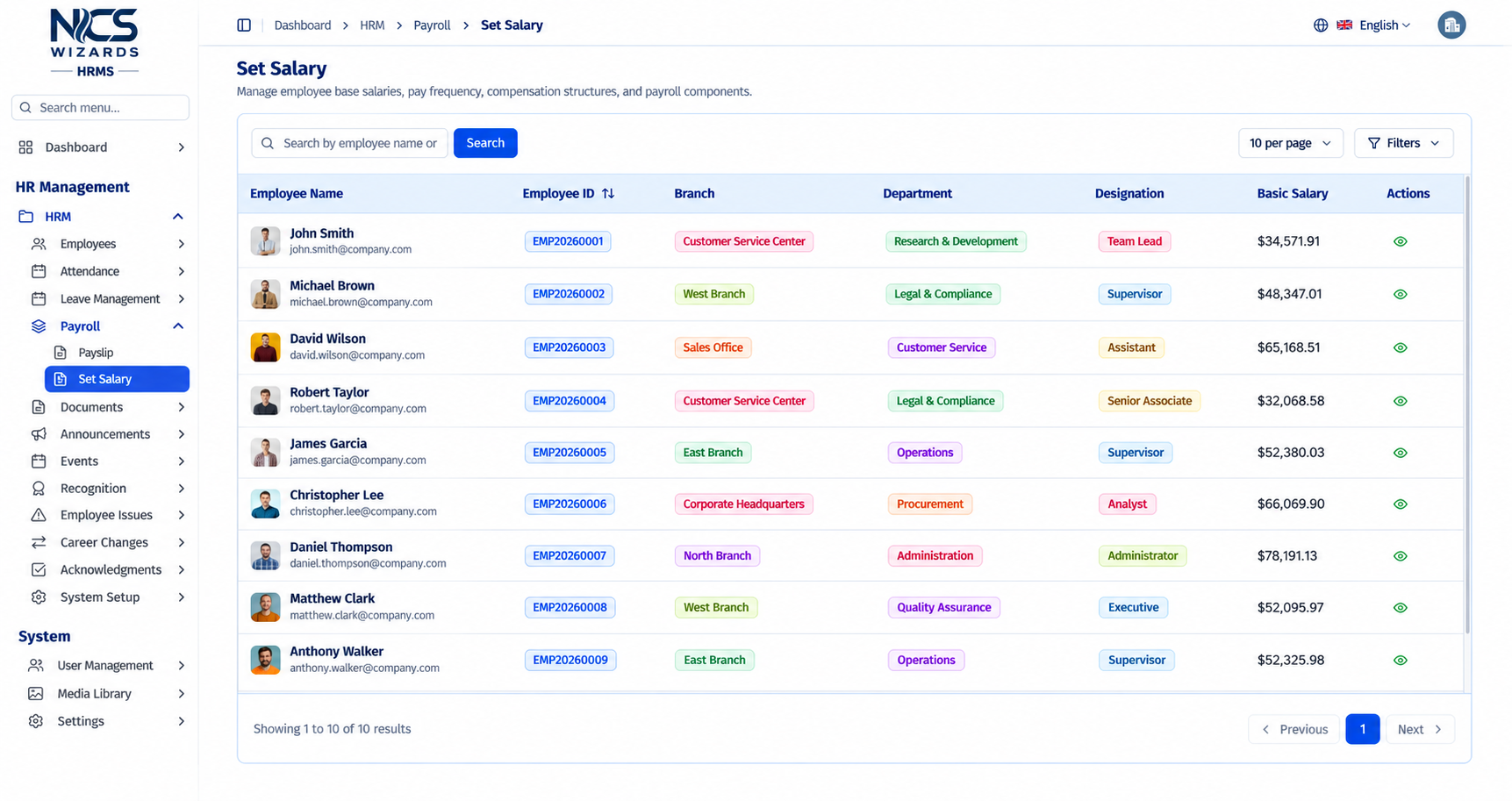
Salary structures: allowances, deductions, loans and overtime
Salary administration starts with an employee list showing basic salary alongside branch, department and designation. The salary detail groups allowances, deductions, loans and overtime separately, keeping the compensation structure readable instead of hiding every adjustment in one total.
Custom payroll software development requires agreement on which components are fixed, which depend on policy and which need approval. Our team can map how effective dates, changes and supporting records should be handled. This gives payroll reviewers a clearer explanation of a salary structure and creates a more practical basis for connecting it with a pay run.
- Employee-level salary structure and component review.
- Separate allowance, deduction, loan and overtime records.
- Permission and effective-date rules defined for sensitive changes.
09 / Inside NCS HRMS
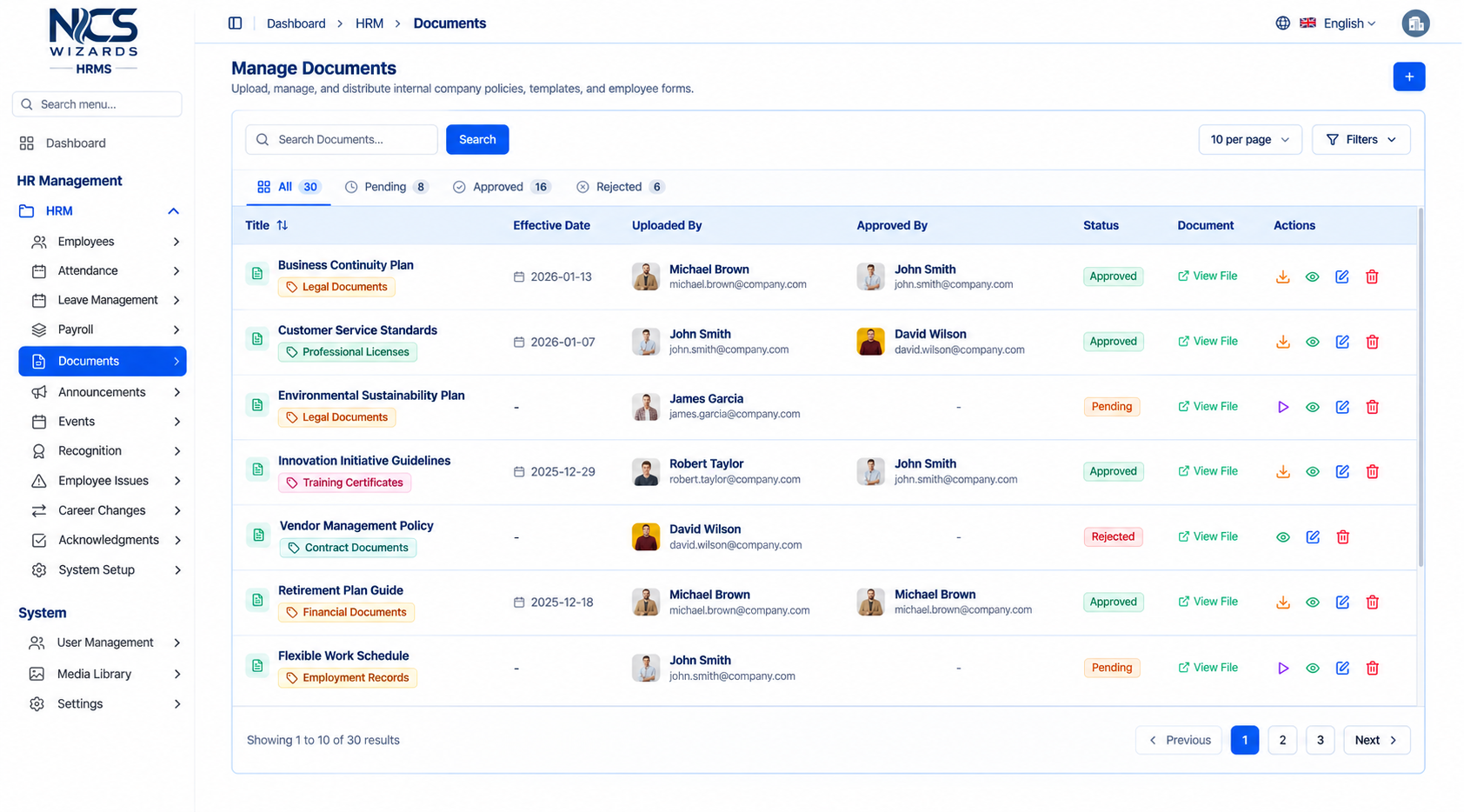
HR documents and employee acknowledgments
Documents organises company policies, templates and employee forms with effective dates, uploader, approval information and document access. Acknowledgments connects a document with the employee, assignment and acknowledgment status. Together these workflows help HR track both the document and the action required from a person.
HR software development should treat document access as part of the workflow, not an afterthought. Bizzeonline can scope access rules, version handling and reminders around the documents a team actually uses. Where employee self-service portal development is required, the employee-facing experience can be planned alongside the administrator’s review process.
- Policy and form records with ownership and review context.
- Employee-level acknowledgment tracking.
- Document permissions and any employee portal requirements scoped together.
10 / Inside NCS HRMS
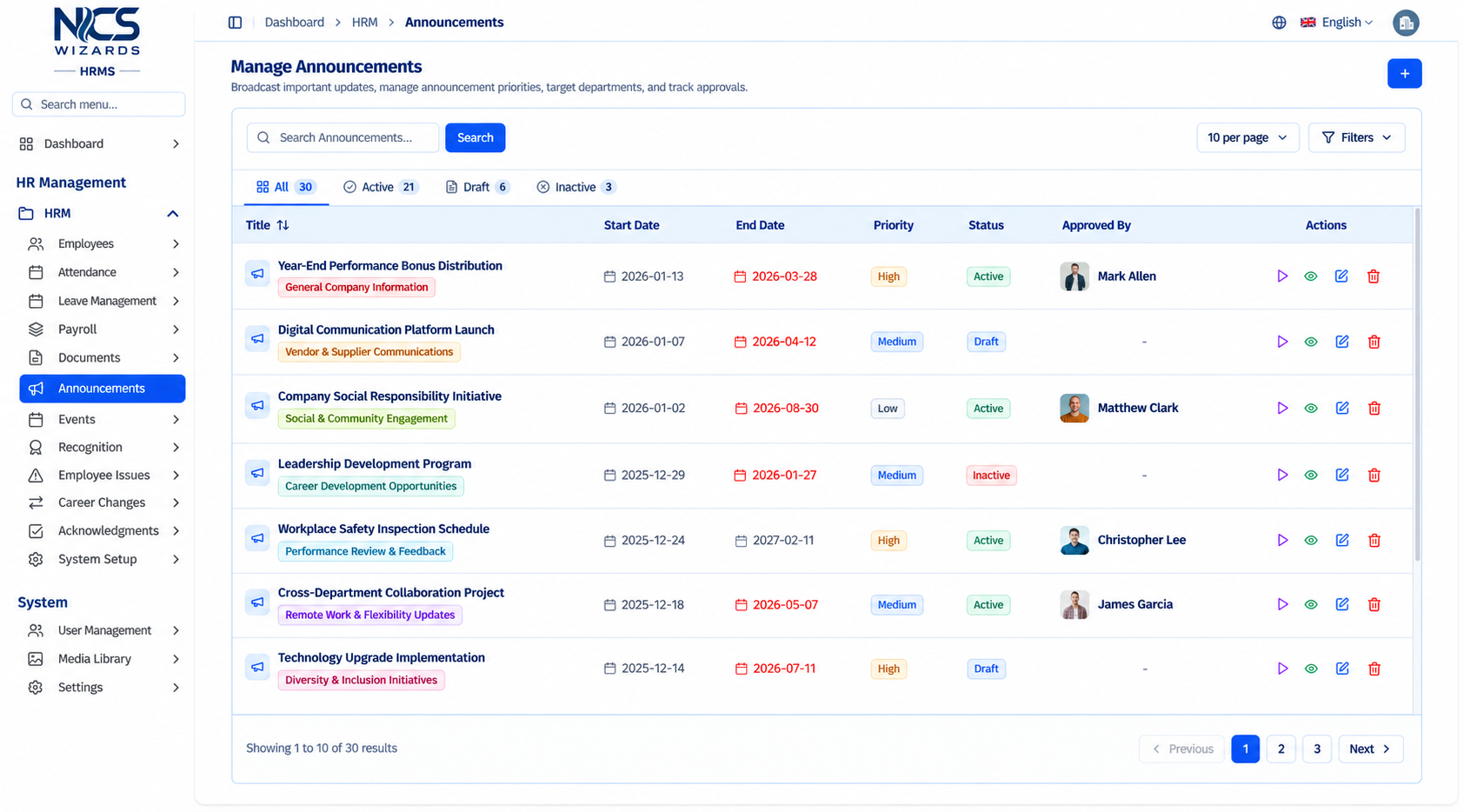
Announcements and events for internal communication
Announcements groups internal updates by title, date range, priority, status and approval context. Events adds the scheduling information needed for meetings, workshops and company activities. Both keep communication records within the wider HR workspace.
For a custom HRMS project, our planning covers who publishes an update, who reviews it and how the intended audience is defined. Notifications and calendar connections can then be assessed against the tools the organisation already uses. This helps avoid maintaining the same communication in several places without a clear source record.
- Internal updates with priority, dates and publishing state.
- Event schedules with start/end times and review information.
- Audience and notification responsibilities defined during discovery.
11 / Inside NCS HRMS
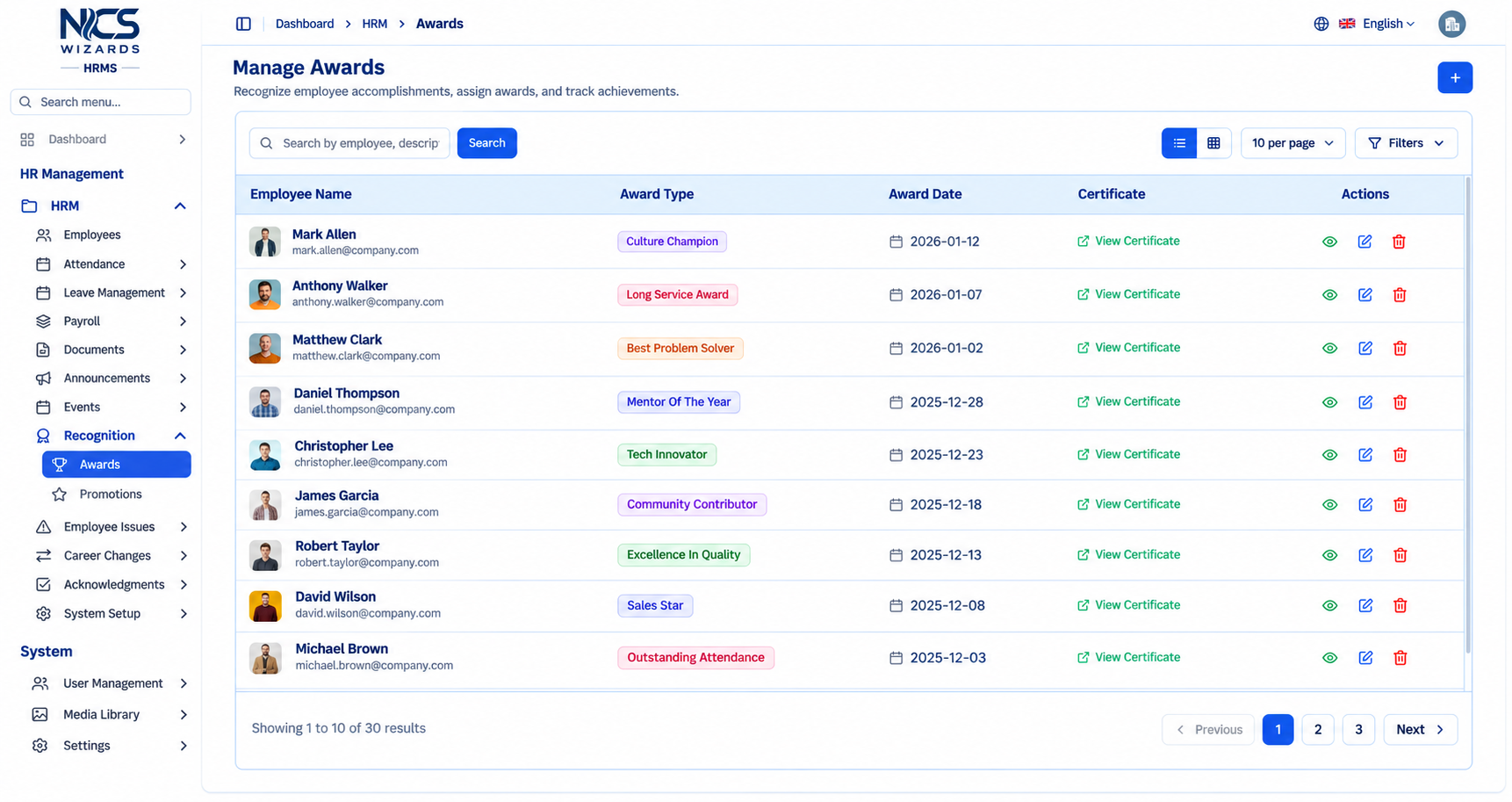
Recognition, awards and employee promotions
Awards groups recognition records by employee, award type, date and certificate access. Promotions adds an employment-change perspective, retaining branch, designation, effective date and approval context. These are related employee-lifecycle activities with different information and review needs.
An HRMS should keep the distinction clear while preserving the employee connection. Bizzeonline can help identify which changes affect the employment record, which require supporting documents and which need to be handed to salary administration. That planning connects recognition with the operational work that follows a role change.
- Awards and certificate references tied to an employee.
- Promotion records with effective dates and approval context.
- A clear handover for changes that affect employee or salary records.
12 / Inside NCS HRMS
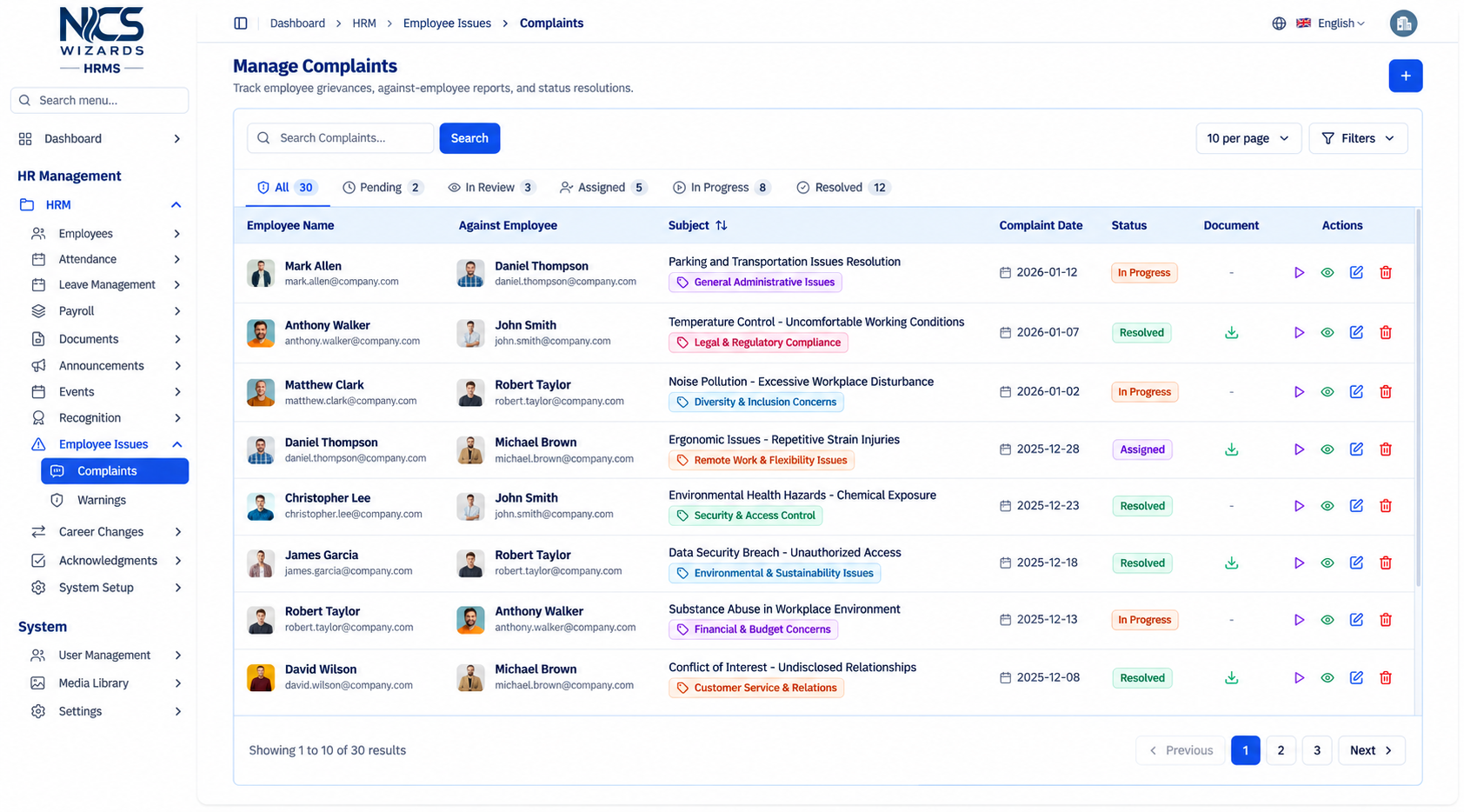
Employee issues: complaints, warnings and controlled review
Employee Issues separates complaints from warnings and gives each a clear record structure. The complaint register keeps the participants, subject, date and resolution state together. Warning records add severity and supporting document context for authorised reviewers.
These workflows require deliberate access boundaries. During HRMS application development, our team works through visibility, review responsibility, history and document access so sensitive information is available to the right people. Status labels should communicate what happens next without exposing a record more widely than the business intends.
- Separate complaint and warning workflows.
- Review states and supporting document context.
- Record visibility and access responsibilities agreed with the business.
13 / Inside NCS HRMS
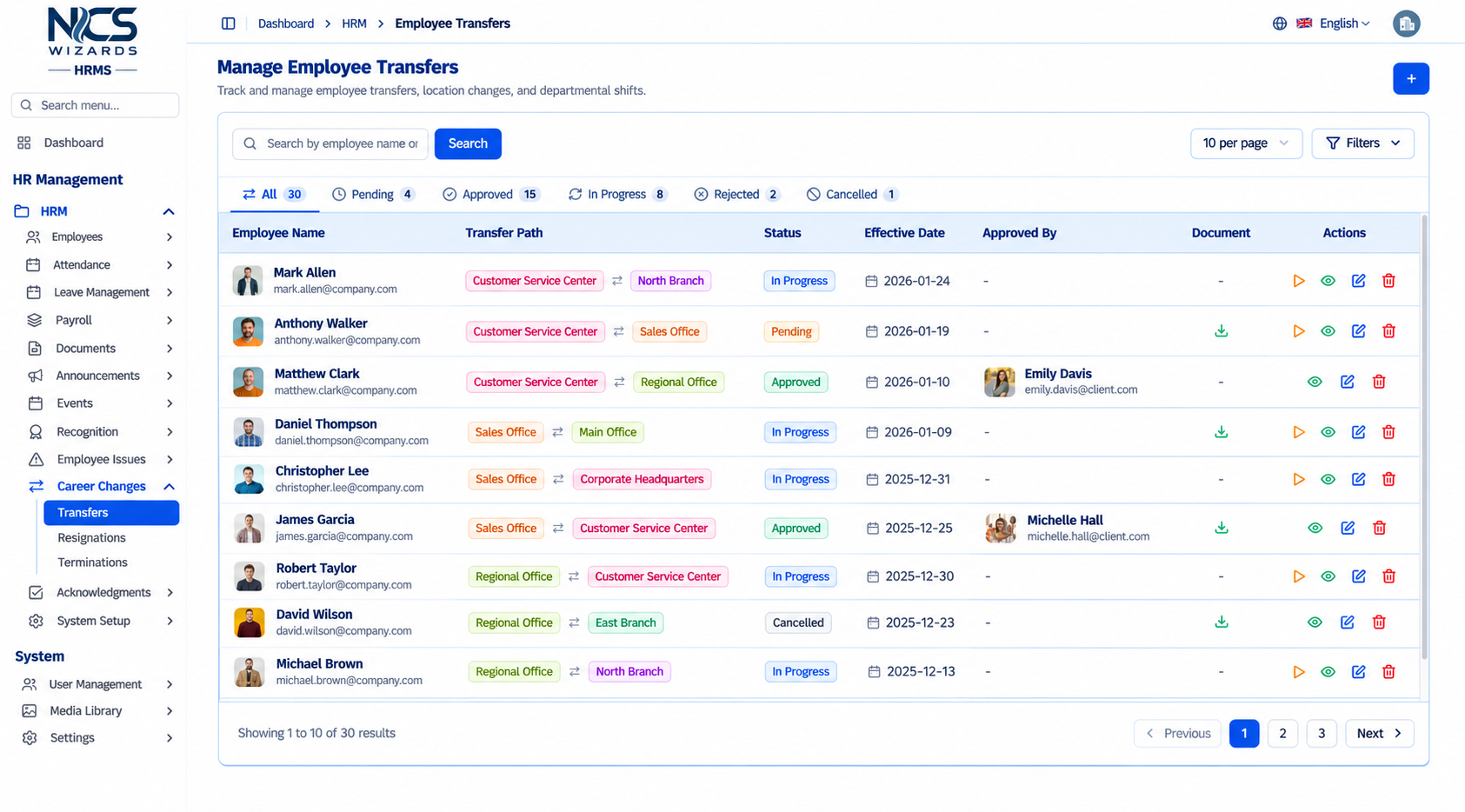
Employee transfers and organisational changes
Transfers records the movement from one organisational location to another alongside the employee, effective date, approval context and status. The transfer path gives staff a more useful explanation of the change than silently replacing a branch value on an employee profile.
For custom HR software development, Bizzeonline maps which related records need to change when a transfer takes effect. Shift assignment, reporting responsibility, document access and salary review may each require a separate decision. An explicit movement workflow helps those handovers become part of the implementation plan.
- Visible source and destination for an employee movement.
- Effective-date and approval information attached to the change.
- Related HR handovers identified before the change is applied.
14 / Inside NCS HRMS
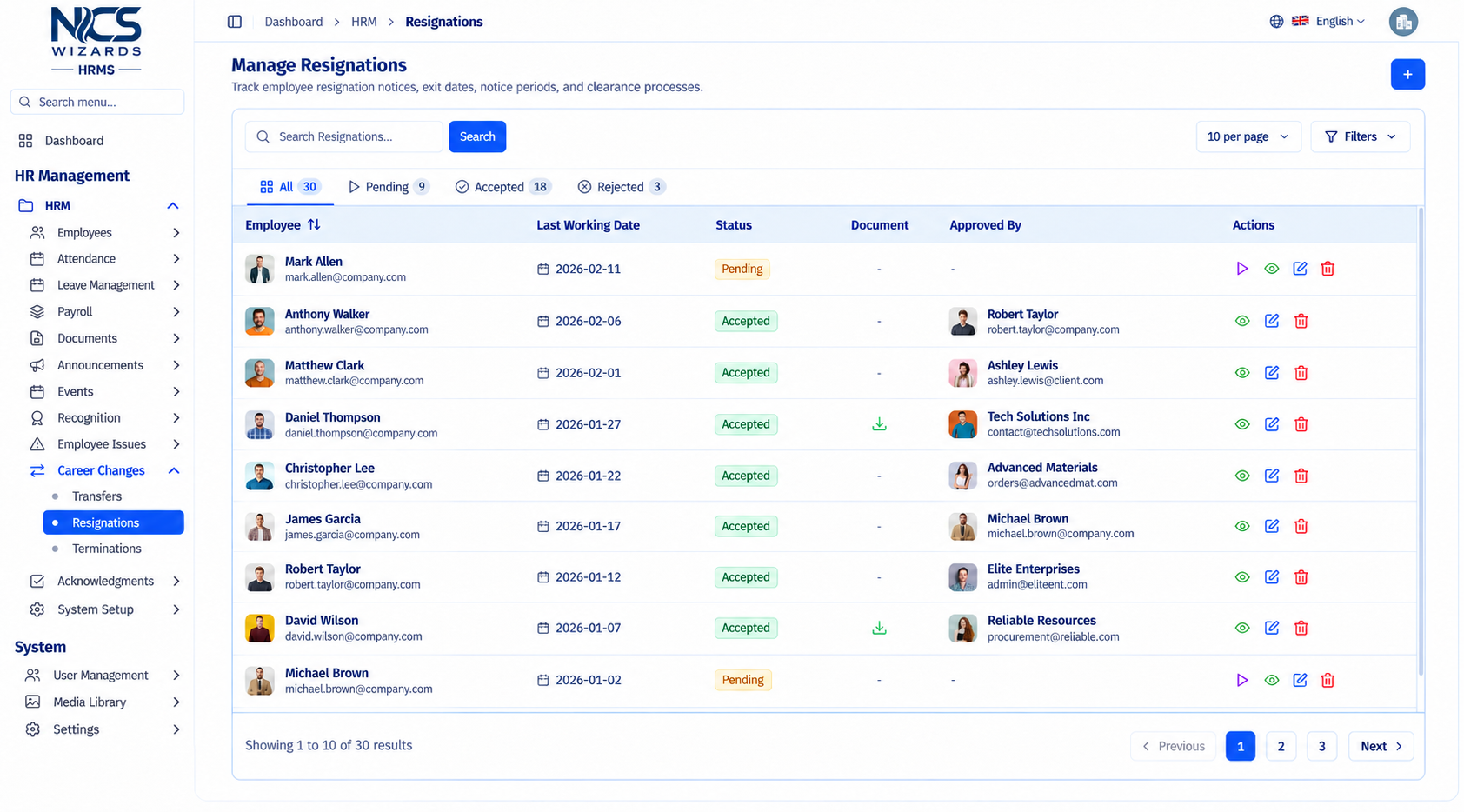
Resignations, terminations and the exit workflow
Career Changes separates resignations and terminations while retaining the employee connection. Resignation records surface the last working date, review state and supporting documents. Termination records add reason categories and notice or effective-date context for authorised review.
An exit workflow should connect the necessary operational handovers. Our HRMS discovery process can cover clearance tasks, access review, outstanding documents and the payroll or accounting responsibilities that need attention. The implementation brief should define those steps explicitly rather than treating an exit as a single status change.
- Exit dates and review information attached to the employee.
- Supporting documents kept with the relevant record.
- Clearance, access and payroll handovers included in the delivery brief.
15 / Inside NCS HRMS
HRMS architecture and business-system integrations
A custom HRMS implementation approach can combine React.js for the working interface, Java Spring Boot for workflow APIs and PostgreSQL for employee, configuration and transaction records. Clear responsibilities separate employee information, time and leave, payroll, documents, communication and lifecycle changes.
Bizzeonline would assess integration boundaries around the business’s existing attendance, accounting, identity and communication systems. A modular service can provide a practical starting point; microservices are an option where independent scaling or ownership justifies the added operating cost. Technology choices should support the agreed workflows and access model, not replace that discovery work.
- React.js interfaces with consistent working patterns.
- Java Spring Boot APIs and PostgreSQL data relationships.
- Explicit API ownership and integration responsibilities.
- Modular or microservice boundaries assessed against actual requirements.
16 / Inside NCS HRMS
Planning for secure access, AWS hosting and scalable operations
An AWS hosting approach can combine containerised services, managed PostgreSQL, controlled document storage and background processing. Employee and salary information need a clear access model, while document links, operational logs and integrations each need scoped permissions.
For scalable HRMS software development, the workload should be measured around actual HR journeys: employee search, attendance review, leave submission, payroll processing and document access. Our implementation planning can define performance targets, backup and recovery requirements, monitoring and deployment checks before a production rollout. No client capacity or performance result is inferred from the interface figures.
- Role-based access designed around employee and payroll responsibilities.
- Measured performance targets for representative HR workflows.
- Backups, monitoring and recovery planning included in the operating approach.
17 / Inside NCS HRMS
Plan your HRMS development project with Bizzeonline
A useful HRMS brief starts with the way your organisation works today. Share the employee structure, attendance process, leave policy, payroll inputs, existing tools and the handovers that create repeated manual work. Our team can help turn that information into a prioritised scope and delivery sequence.
The delivery approach can include workflow discovery, interface review, integration planning, controlled releases and acceptance checks across complete employee journeys. Git, Docker and CI/CD can support versioned releases, while migration and permission tests help prepare the system for operational review. If you are comparing an HRMS development company or HR software development services, discuss the workflows and integration requirements with Bizzeonline before committing to a feature list.
- Begin with employee, attendance, leave and payroll requirements.
- Agree integrations, review responsibilities and a practical first release.
- Validate complete HR journeys with the people who will use them.
HRMS implementation approach
Questions about this project
Can Bizzeonline plan an HRMS around our policies?
We can help map your employee structure, attendance rules, leave policies, payroll inputs and approval responsibilities into a custom HRMS development brief.
Can an HRMS connect with our existing attendance or accounting tools?
Integration planning depends on the tools, their available interfaces and which system owns each record. These responsibilities can be assessed during discovery.
Can employee self-service be included?
Employee self-service portal development can be scoped around leave requests, documents, salary information and the access rules your organisation needs.
How do we start an HRMS development project?
Share your current HR processes, software, employee structure and launch priorities through the enquiry form. Our team can discuss the workflows and define the next discovery steps.
Interface illustrations are adapted from supplied ERPGo screens with NCS branding. The architecture describes an implementation approach; production rollout and client performance results are not documented here. About the team.