01 / The client
Project overview: Zouk
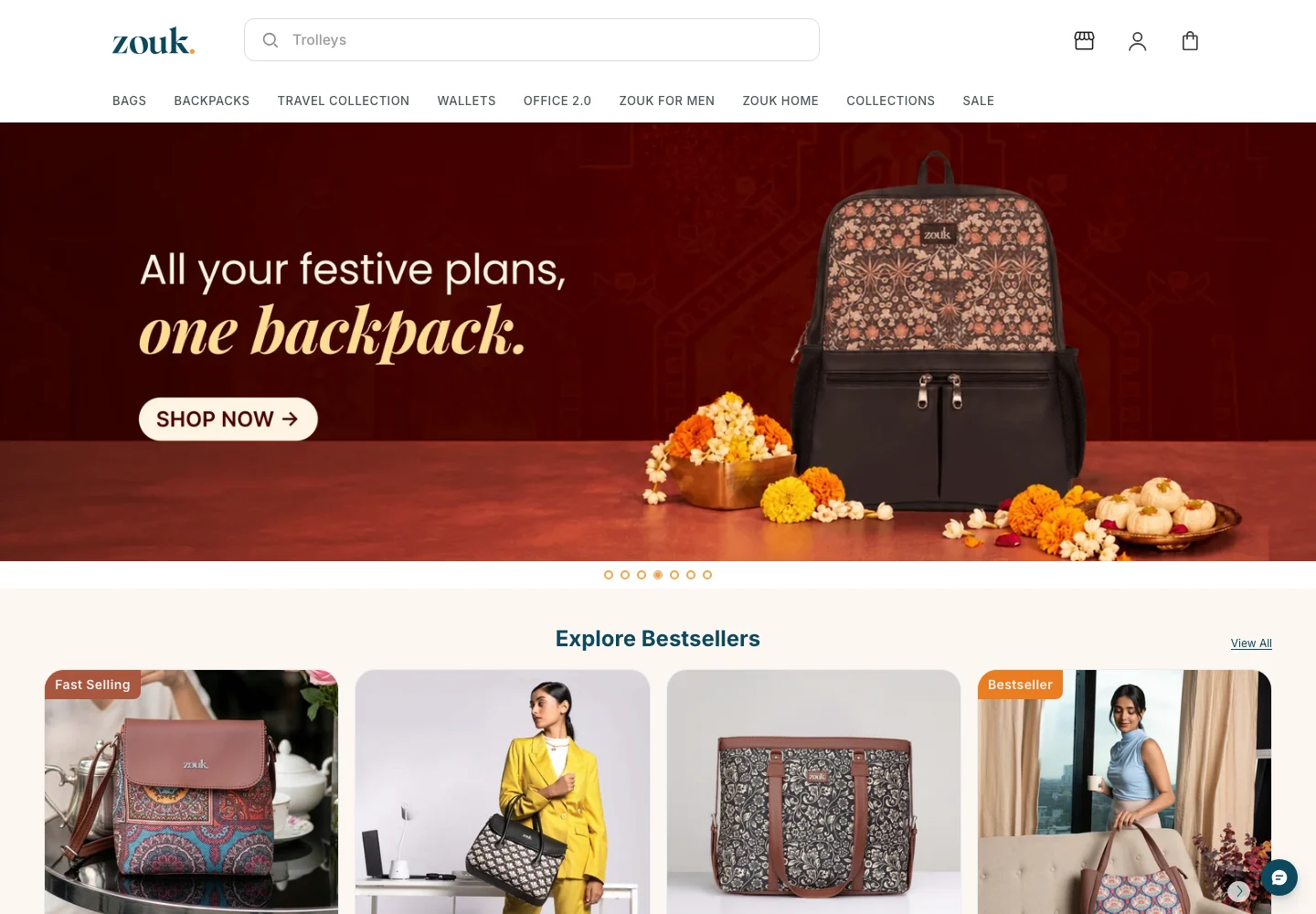
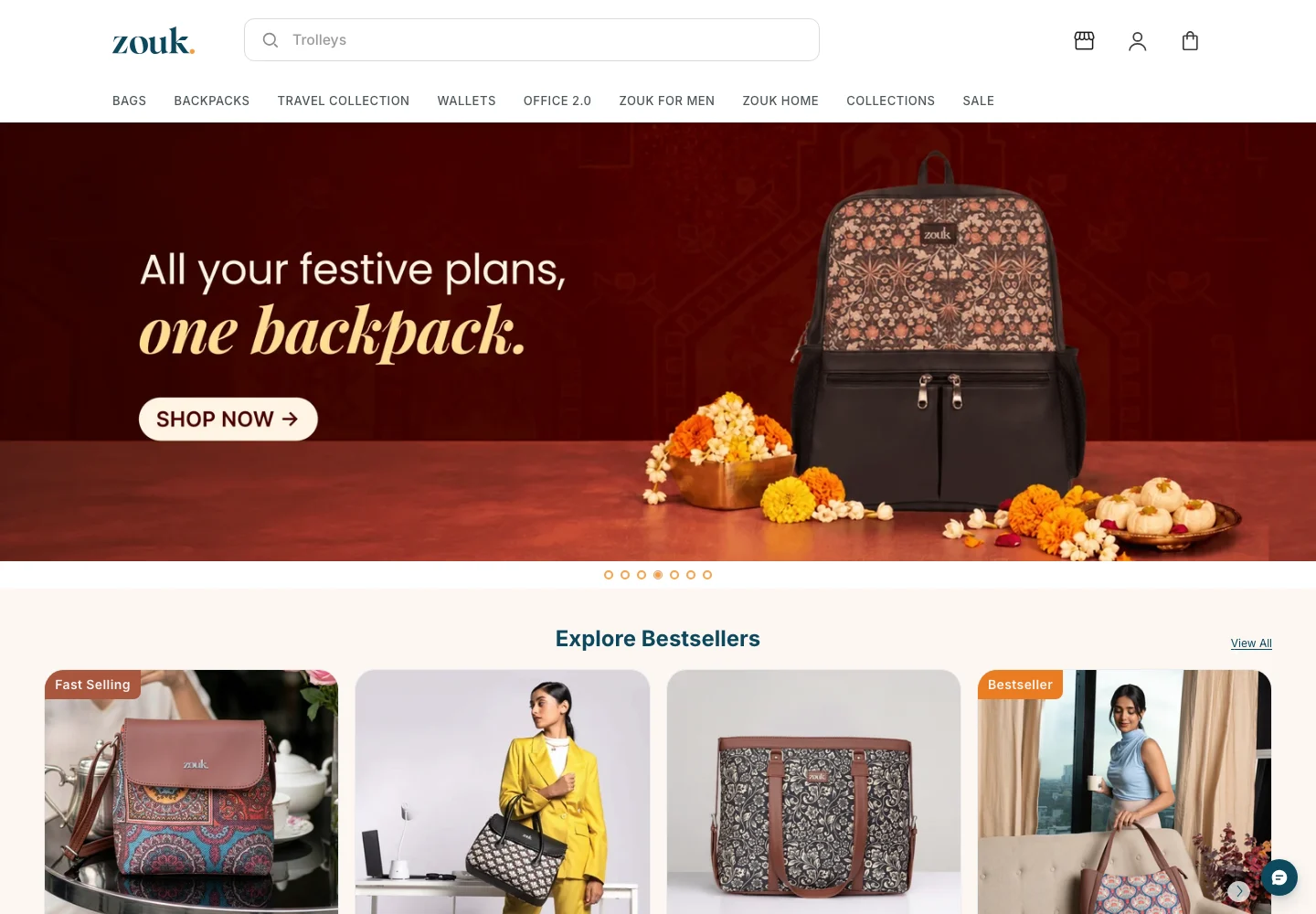
Zouk is a lifestyle retail brand with a storefront covering bags, wallets and travel-related accessories. Its online discovery combines product-type navigation with usage contexts and design-led groupings. The case study focuses on organising a visually varied assortment so that a customer can connect the appeal of a design with the practical role of the product.
Support a broad accessories catalogue with clear use-case discovery, distinguish related bag formats and make product selection workable on a mobile screen.
- Industry
- E-commerce & On-Demand
- Services / expertise
- Shopify eCommerce · Shopify · Bags & Accessories
- Client
- Zouk
- Platform
- Shopify
- Industry
- Bags, wallets & travel accessories
- Client website
- Visit Zouk ↗
Planning a similar project? Explore our eCommerce development services.
02 / The project
Storefront requirements
A meaningful bag hierarchy: Office bags, totes, sling formats and other accessories need names and groupings that help customers understand their differences. A category should communicate a practical starting point rather than depend entirely on visual recognition.
Use-case and design discovery: Some shoppers start with a use such as work or travel; others begin with a print or collection. The store needs both routes, while keeping them connected to the same product records and avoiding separate, inconsistent catalogues.
Product comparison context: Customers need a way to evaluate whether a format suits the items they carry and the way they intend to use it. Product information should complement styling imagery with useful specifications and a clear view of the selected item.
Connected retail touchpoints: The website includes routes beyond immediate online purchasing, including store information. These touchpoints should support the product journey and give customers an understandable next step when they want to explore a location or contact the brand.
03 / The project
Design and catalogue challenges
Similar products with different uses: Several bag formats can look related in a small thumbnail. The navigation and product descriptions need to explain the practical difference so a customer is not forced to infer capacity or purpose from styling alone.
Print-heavy presentation: A rich visual range can become difficult to scan if colour, pattern and product type compete for attention. Consistent card structure helps shoppers compare products while allowing the design of each item to remain visible.
Large mobile menus: A broad accessories menu needs a manageable mobile hierarchy. Expandable choices should preserve the customer's place and make it obvious how to return to the parent group or open the selected collection.
New ranges within an established system: New collections should have prominent entry points without weakening permanent product-type navigation. The store must allow campaigns to change while customers can still find familiar categories.
04 / The project
Shopping experience
Product-type collection structure: A category-based catalogue provides the stable navigation layer. Customers who know the kind of accessory they need can enter the corresponding range without depending on the current homepage campaign.
Use-case shopping routes: Usage-led discovery connects merchandising with the customer's task. A customer shopping for a workday or travel requirement can begin with that context and then evaluate individual items within a relevant collection.
Design-led discovery: Visual groupings provide an additional route for customers drawn to a particular look. The important design decision is to keep those groups linked to normal product pages, allowing inspiration to lead into comparable information and a purchase action.
Collection and product continuity: The product journey should maintain the selected item's name, image and commercial context as the customer moves between a listing and the detail page. This continuity is particularly useful when several visually similar styles appear together.
Support beyond the online cart: Store information and customer-support routes offer a continuation of the shopping relationship. They should remain easy to distinguish from online cart actions so a visitor understands whether they are purchasing, finding a location or asking for assistance.
05 / The project
Merchandising and operations
Product data discipline: Treat product type, design grouping and use-case tags as different attributes. Merchandising can then create useful edits without replacing the underlying category or embedding every relationship in the product title.
Catalogue presentation review: Review primary imagery and descriptive information together before publication. A product that looks distinctive in a campaign image still needs a comparable listing card and a clear detail-page identity.
Campaign maintenance: Assign ownership of collection links and campaign landing destinations. A removed promotion should not leave a menu item pointing to an empty collection or an image linked to a product that no longer represents the message.
06 / The project
Launch review checklist
Multiple discovery paths: Use a product-type path and a use-case path to reach an item and confirm that product information stays consistent.
Mobile category controls: Check expansion, scrolling and destination links for the longest category groups on a phone.
Image and item alignment: Confirm that a listing card, detail page and cart refer to the same product and selected option.
07 / The project
Project outcomes
A navigable accessories range: The storefront presents a varied assortment through a stable category foundation with additional design and usage context.
A clearer selection process: Customers can move from an initial need or visual preference to a recognisable product journey rather than browsing an undifferentiated catalogue.
A repeatable merchandising model: Separating campaigns from permanent product categories gives future ranges a place in the store without requiring navigation to be reinvented each time.
Technology used
Project profile based on the supplied Bizzeonline ecommerce case-study material and documented public storefront. No sales or conversion uplift is claimed. About the team.